A spine tumor is an abnormal growth of cells that develops within or around the spinal bones, spinal cord, nerves or surrounding tissues. Spine tumors may be benign or malignant and can originate in the spine itself or develop when cancer from another part of the body spreads to the spine. Spine tumor treatment in Noida and Delhi NCR depends on the type and location of the tumor, its size, spinal cord or nerve involvement, cancer stage when applicable, overall health and individual treatment needs. As a radiation oncologist, Dr. Gagan Saini provides comprehensive cancer care with a focus on advanced radiation therapy for selected patients with spine tumors. Depending on the diagnosis and individual condition, treatment may involve surgery, radiation therapy, systemic cancer treatment, observation or a combination of approaches. If you are looking for a spine tumor specialist, spine tumor treatment or an experienced radiation oncologist for cancer treatment, timely consultation can help determine the most appropriate treatment approach.
What Is a Spine Tumor?
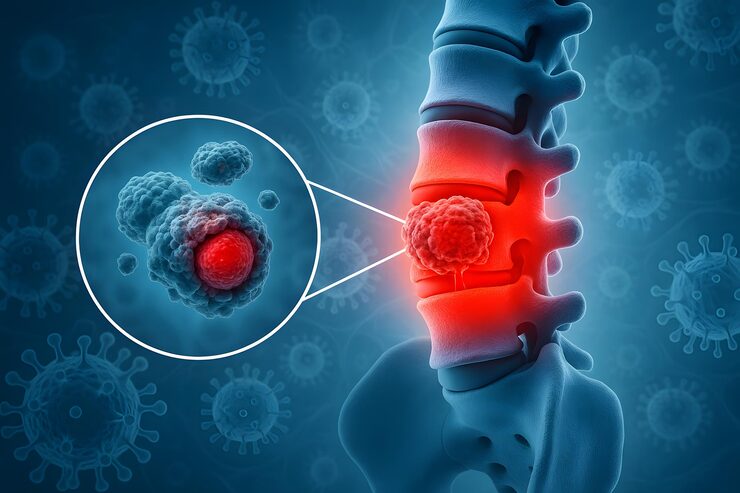
A spine tumor is an abnormal growth that develops in or near the spinal column. Tumors may arise from the bones of the spine, spinal cord, nerve roots or surrounding soft tissues. Some spine tumors are primary tumors, meaning they begin in the spine or nearby structures. Others are metastatic tumors, which occur when cancer from another part of the body spreads to the spine. Spine tumors can vary significantly in their behavior and treatment requirements. The appropriate treatment depends on whether the tumor is benign or malignant, its exact location, growth pattern, size and effect on nearby structures.
Symptoms of a Spine Tumor
A spine tumor may cause symptoms such as:
- Persistent back or neck pain
- Pain that may become worse at night or while resting
- Pain that spreads to the arms or legs
- Numbness or tingling
- Weakness in the arms or legs
- Difficulty walking or maintaining balance
- Reduced coordination
- Changes in bladder or bowel control
- Muscle weakness
- Unexplained weight loss or fatigue in some patients
Back pain is very common and does not necessarily indicate a spine tumor. However, persistent or unexplained pain, particularly when associated with weakness, numbness or changes in bladder or bowel function, should be evaluated promptly by a doctor.
How Is a Spine Tumor Diagnosed?
Diagnosis usually begins with a detailed medical history, physical examination and neurological assessment. If a spine tumor is suspected, additional investigations may be recommended.
These may include:
- MRI of the spine
- CT scan
- X-ray in selected cases
- PET-CT or other imaging when required
- Blood tests
- Biopsy of the tumor when appropriate
- Additional imaging to identify the extent of disease
MRI is particularly useful for evaluating the spinal cord, nerves, vertebrae and surrounding soft tissues. A biopsy may be recommended when tissue confirmation is required to determine the exact type of tumor and guide treatment. The imaging and pathology findings are evaluated along with the patient's symptoms and medical history to establish the diagnosis and develop an appropriate treatment plan.
Spine Tumor Treatment
The treatment of a spine tumor depends on the type of tumor, its location and size, whether it is benign or malignant, spinal cord or nerve involvement, extent of disease and individual patient factors.
Treatment may include:
- Surgery
- Radiation therapy
- Chemotherapy or systemic cancer treatment
- Targeted treatment in selected cancers
- Observation or active monitoring for selected benign tumors
- Stereotactic radiation therapy in appropriate cases
- A combination of treatments
Surgery may be recommended when a tumor is causing significant pressure on the spinal cord or nerves, when tissue diagnosis is required or when removal of the tumor is appropriate. Radiation therapy may be considered for selected tumors that are sensitive to radiation, tumors that cannot be completely removed surgically, recurrent disease or metastatic tumors involving the spine.
Radiation Therapy for Spine Tumors
Radiation therapy can play an important role in the treatment of selected spine tumors. It may be used to control tumor growth, treat residual disease after surgery or provide symptom relief in patients with metastatic spine tumors. Because the spinal cord and important nerves are located close to the treatment area, radiation therapy requires highly precise planning. The treatment approach depends on the type and location of the tumor, previous treatment, spinal cord involvement and the overall treatment goal. Modern radiation techniques can help deliver radiation to the intended tumor while limiting unnecessary exposure to the spinal cord and surrounding healthy tissues.
Radiation Therapy for Metastatic Spine Tumors
Cancer from organs such as the breast, lung, prostate, kidney and other parts of the body can spread to the spine. Spinal metastases are an important cause of cancer-related back pain and may sometimes affect the stability of the spine or put pressure on the spinal cord.
Radiation therapy may be recommended for selected patients with spinal metastases to help control tumor growth and relieve cancer-related pain. In appropriately selected patients, focused radiation techniques may be used to deliver a high dose of radiation to a specific tumor while protecting nearby sensitive structures such as the spinal cord. Patients with spinal metastases may also require systemic cancer treatment, surgery or other supportive treatments depending on the extent of disease and overall condition.
Stereotactic Radiation Therapy for Spine Tumors
Stereotactic radiation therapy may be considered for selected patients with localized spine tumors or spinal metastases. It uses highly focused radiation to deliver treatment to a defined target with careful attention to nearby normal tissues. This approach may be particularly useful when precise local tumor control is required or when a patient has previously received radiation to the same region. The suitability of stereotactic radiation therapy depends on factors such as tumor size and location, spinal cord proximity, previous radiation treatment, overall health and treatment goals.
Radiation Therapy for Recurrent or Residual Spine Tumors
Radiation therapy may also be considered when a spine tumor returns after initial treatment or when some tumor tissue remains following surgery. The treatment approach depends on the type of tumor, location of recurrent disease, previous radiation exposure and the patient's overall condition. In selected cases, advanced radiation techniques can help target recurrent or residual disease while carefully limiting radiation exposure to the spinal cord and other nearby structures.
Advanced Radiation Therapy for Spine Tumors
Radiation treatment for spine tumors requires detailed planning because the spinal cord and nerve structures can be highly sensitive to radiation. Techniques such as Intensity-Modulated Radiation Therapy (IMRT), image-guided radiation therapy (IGRT) and stereotactic body radiation therapy (SBRT) may be considered for appropriately selected patients. These techniques can help the radiation oncology team precisely target the tumor while limiting unnecessary radiation exposure to nearby healthy tissues. The radiation technique, treatment area and dose are selected according to the patient's tumor type, location, size, previous treatment, spinal cord proximity and overall treatment goals.
Why Choose a Radiation Oncologist for Spine Tumor Treatment?
Spine tumor treatment often requires close coordination between neurosurgery orthopedic oncology, medical oncology, radiation oncology, radiology and pathology specialists. An experienced radiation oncologist evaluates the patient's imaging, pathology, tumor characteristics, previous treatments and neurological condition before determining whether radiation therapy may be beneficial. Because the spinal cord and nerves are highly sensitive structures, radiation treatment requires careful dose planning and accurate treatment delivery. Dr. Gagan Saini focuses on personalized cancer treatment planning and advanced radiation therapy techniques, with treatment decisions based on the patient's diagnosis, tumor location, medical history and individual treatment requirements.
What to Expect During Spine Tumor Radiation Treatment
Before radiation therapy begins, the radiation oncology team performs detailed treatment planning to determine the appropriate radiation dose, treatment area and schedule.
During treatment:
- The patient is positioned carefully for each treatment session.
- Imaging is used to identify the tumor and nearby spinal cord and nerve structures.
- The treatment plan is designed to minimize unnecessary radiation exposure to surrounding healthy tissues.
- Radiation is delivered according to the prescribed treatment plan.
- The oncology team regularly monitors the patient's response and manages treatment-related side effects.
Some patients may experience tiredness, skin changes or discomfort depending on the treatment area and radiation dose. Patients receiving radiation near the spine may be monitored carefully for neurological symptoms and other treatment-related effects. Side effects vary from person to person and depend on the radiation dose, treatment field, technique and individual factors.
Importance of Early Spine Tumor Evaluation
Persistent or unexplained back or neck pain should not always be assumed to be a routine musculoskeletal problem, particularly when symptoms continue despite usual treatment or are accompanied by neurological symptoms. Numbness, weakness, difficulty walking or changes in bladder or bowel control require prompt medical evaluation. Early diagnosis can help determine whether symptoms are related to a spine tumor or another condition. If a tumor is diagnosed, timely consultation with a multidisciplinary team can help establish an appropriate treatment plan.
Personalized Spine Tumor Treatment
Every spine tumor diagnosis is different. Treatment decisions depend on the type of tumor, location, size, spinal cord or nerve involvement, imaging findings, pathology, previous treatment and overall health. Patients with localized tumors may require surgery, radiation therapy or a combination of treatments. Patients with metastatic spine tumors may require radiation therapy for local tumor control or pain relief along with systemic cancer treatment. A personalized treatment plan helps the oncology team select the most appropriate treatment approach while considering tumor control, neurological function, pain management and long-term quality of life.
Consult Dr. Gagan Saini for Spine Tumor Treatment
A spine tumor diagnosis can be challenging, particularly when the tumor is located close to the spinal cord or important nerves. Timely evaluation and appropriate treatment planning can help patients understand their diagnosis, available treatment options and potential side effects. If you are searching for a spine tumor doctor, spine tumor treatment specialist, best radiation oncologist for spine tumor treatment in Noida and Delhi NCR or cancer treatment specialist, consult Dr. Gagan Saini for an individualized evaluation and treatment plan. Book a consultation with Dr. Gagan Saini to discuss your spine tumor diagnosis and understand whether advanced radiation therapy may be appropriate for your condition.
Frequently Asked Questions
1. Can spine tumors be treated with radiation therapy?
Yes. Radiation therapy may be used for selected spine tumors depending on the tumor type, location, size and individual treatment plan.
2. What are the common symptoms of a spine tumor?
Persistent back or neck pain, numbness, weakness, difficulty walking and changes in bladder or bowel function may occur. Symptoms vary depending on the tumor's location and effect on nearby structures.
3. Can radiation therapy help with pain from a spine tumor?
Yes. Radiation therapy may help reduce cancer-related pain and control tumor growth in selected patients, particularly those with metastatic tumors involving the spine.
4. How is a spine tumor diagnosed?
Diagnosis may involve MRI or CT imaging, neurological examination and, when appropriate, a biopsy to determine the type of tumor.
5. What is stereotactic radiation therapy for spine tumors?
Stereotactic radiation therapy is a highly precise form of radiation treatment that can deliver focused radiation to a selected spinal tumor while carefully limiting exposure to nearby sensitive structures.
6. When should I see a radiation oncologist for a spine tumor?
You should consider consulting a radiation oncologist when radiation therapy is being considered as part of your spine tumor treatment, including selected primary, recurrent or metastatic tumors.