Melanoma Treatment
Advanced Melanoma Treatment with Personalized Radiation Therapy
Melanoma is a type of skin cancer that develops from melanocytes, the cells responsible for producing melanin, the pigment that gives skin its colour. Although melanoma is less common than some other types of skin cancer, it can behave aggressively and may spread to nearby lymph nodes or distant organs if not diagnosed and treated appropriately. Melanoma treatment in Noida and Delhi NCR depends on the stage, size, location and characteristics of the melanoma, lymph node involvement, presence of distant disease, overall health and individual treatment goals. Dr. Gagan, a radiation oncologist, provides personalized radiation treatment planning for selected patients with melanoma. If you are looking for the best melanoma treatment in Noida and Delhi NCR, a melanoma specialist or an experienced radiation oncologist for cancer treatment, timely consultation can help determine the most appropriate treatment approach.
What Is Melanoma?
Melanoma develops when melanocytes begin to grow abnormally and uncontrollably. It can develop anywhere on the skin and may also occur in areas such as the eyes or other less common locations. Melanoma can sometimes develop from an existing mole, but it may also appear as a new skin lesion. Changes in the appearance of a mole or the development of a new unusual lesion should be evaluated by a qualified medical professional. Common factors associated with an increased risk of melanoma may include significant ultraviolet radiation exposure, a history of sunburn, numerous or atypical moles, fair skin and a personal or family history of melanoma.
Symptoms of Melanoma
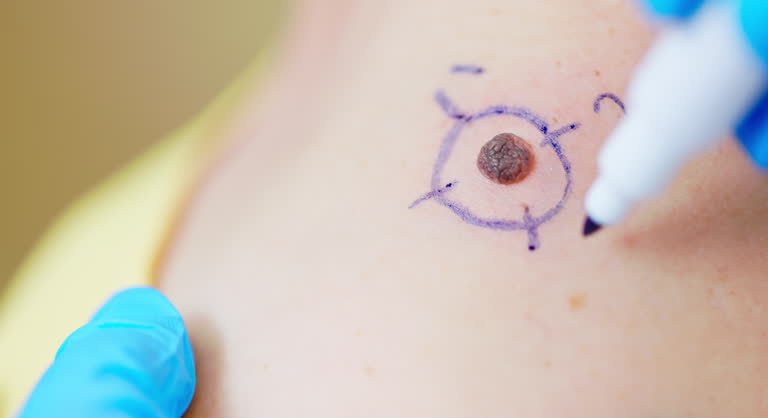
Melanoma may appear as a new or changing pigmented lesion. Possible signs include:
- A new mole or unusual skin growth
- Change in the size of an existing mole
- Irregular or asymmetrical shape
- Uneven or multiple colours within a lesion
- Irregular or poorly defined borders
- A mole that continues to change
- Itching, tenderness or discomfort in a lesion
- Bleeding or crusting
- A lesion that looks different from other moles on the skin
Not every unusual mole is melanoma. However, a changing or suspicious skin lesion should be assessed by an appropriate specialist.
How Is Melanoma Diagnosed?
Diagnosis usually begins with a detailed examination of the skin and medical history. Dermoscopy may be used to examine suspicious lesions more closely.
Depending on the clinical situation, investigations may include:
- Detailed skin examination
- Dermoscopy
- Excisional or other appropriate skin biopsy
- Histopathological examination
- Assessment of tumor thickness and other pathological features
- Lymph node evaluation when indicated
- CT, MRI or PET-CT for selected patients
- Additional tests for advanced disease
A biopsy is essential for confirming melanoma. The pathology report provides important information about the characteristics of the tumor and helps determine the stage and appropriate treatment strategy.
Melanoma Treatment
Melanoma treatment depends on the stage and characteristics of the cancer. Treatment may involve local, regional or systemic approaches depending on the extent of disease.
Depending on the patient's diagnosis, treatment may include:
- Surgery
- Radiation therapy
- Immunotherapy
- Targeted therapy for selected melanomas
- Lymph node treatment
- Systemic cancer treatment
- A combination of treatments
For localized melanoma, surgery is often an important part of treatment. In advanced melanoma, systemic therapies such as immunotherapy or targeted therapy may play a major role. Radiation therapy has a more selective role and may be recommended for specific clinical situations.
Radiation Therapy for Melanoma
Radiation therapy uses high-energy radiation to damage and destroy cancer cells. Melanoma has traditionally been considered less sensitive to conventional radiation therapy than some other cancers, but modern radiation techniques can have an important role in selected patients.
Radiation therapy may be considered:
After Surgery
Radiation therapy may be considered after surgery in selected high-risk situations where there is an increased risk of local or regional recurrence. The decision depends on factors such as tumor characteristics, margins, lymph node involvement and other pathological findings.
For Lymph Node or Regional Disease
When melanoma involves regional lymph nodes or nearby structures, radiation therapy may be considered in selected cases depending on the extent of disease and overall treatment strategy.
For Brain Metastases
Melanoma can spread to the brain in advanced disease. Highly focused radiation techniques such as stereotactic radiosurgery or stereotactic radiotherapy may be considered for selected patients with limited brain metastases.
For Other Metastatic Sites
Radiation therapy may also be used for selected metastatic lesions to provide local tumor control or relieve symptoms such as pain, bleeding or pressure on nearby structures.
The role of radiation therapy is individualized according to the patient's disease characteristics and overall cancer treatment plan.
Advanced Radiation Therapy for Melanoma
Modern radiation oncology allows treatment to be planned with greater precision. Depending on the location and extent of melanoma, advanced techniques may be considered to deliver radiation accurately to the intended treatment area.
These may include:
- Intensity-Modulated Radiation Therapy (IMRT)
- Image-guided radiation therapy
- Stereotactic radiosurgery
- Stereotactic body radiation therapy (SBRT)
- Other highly focused radiation approaches when clinically appropriate
Advanced radiation planning can help the radiation oncology team target the tumor while reducing unnecessary radiation exposure to nearby healthy tissues.
Dr. Gagan evaluates the patient's pathology, imaging, tumor location, previous treatments and overall condition before developing an individualized radiation treatment plan.
What to Expect During Radiation Therapy?
Before radiation treatment begins, the radiation oncology team performs detailed treatment planning. Imaging and previous diagnostic reports are reviewed to determine the appropriate treatment area, dose and radiation technique.
During treatment:
- The patient is positioned carefully according to the treatment plan.
- Imaging may be used to verify the treatment area.
- Radiation is delivered using the selected technique.
- The patient's response and treatment-related effects are monitored.
Radiation therapy itself is generally painless. Depending on the treatment location and radiation dose, patients may experience fatigue, skin changes, irritation or other localized effects. When the brain is treated, additional side effects may occur depending on the treatment area and individual circumstances. The radiation oncology team monitors patients throughout treatment and provides appropriate supportive care.
Why Choose an Experienced Radiation Oncologist for Melanoma?
Radiation therapy for melanoma requires careful evaluation because its role varies according to the stage and location of the disease. Treatment planning is particularly important when melanoma involves the brain, spinal cord or other sensitive structures.
Dr. Gagan follows a personalized approach to radiation oncology, considering:
- Melanoma type and stage
- Tumor location and size
- Lymph node involvement
- Presence of metastatic disease
- Previous surgery or systemic treatment
- Imaging findings
- Nearby critical structures
- Overall health and treatment goals
The objective is to provide appropriate tumor-directed radiation treatment while minimizing unnecessary exposure to surrounding healthy tissues as much as reasonably possible.
Importance of Early Evaluation for Melanoma
Melanoma can progress and spread if it is not diagnosed and treated appropriately. A new or changing mole, unusual pigmented lesion or skin growth should be evaluated promptly, particularly when it shows changes in size, shape, colour or appearance. Early diagnosis can help determine the stage of melanoma and allow the cancer team to develop an appropriate treatment strategy. Patients with a personal history of melanoma or other risk factors may also require regular skin examinations according to their individual medical advice.
Consult Dr. Gagan for Melanoma Treatment
A melanoma diagnosis requires timely and specialized cancer evaluation. Treatment depends greatly on the stage and biological characteristics of the disease, and radiation therapy may have a specific role in selected patients. If you are searching for the best melanoma treatment in Noida and Delhi NCR, best melanoma doctor in Noida and Delhi NCR, melanoma specialist, melanoma cancer treatment oncologist or an experienced radiation oncologist, Dr. Gagan can evaluate your condition and discuss whether radiation therapy may be appropriate as part of your overall treatment plan. Book a consultation with Dr. Gagan to discuss your melanoma diagnosis and understand the personalized radiation treatment options suitable for your condition.
Frequently Asked Questions
1. What is melanoma?
Melanoma is a type of cancer that develops from melanocytes, the pigment-producing cells of the skin. It can be more aggressive than many other skin cancers.
2. What are the warning signs of melanoma?
Warning signs may include a new or changing mole, irregular borders, uneven colour, increasing size, itching, bleeding or other noticeable changes in a skin lesion.
3. Can melanoma be treated with radiation therapy?
Yes. Radiation therapy may be used in selected melanoma cases, including certain regional, recurrent or metastatic tumors and selected brain metastases.
4. Is radiation therapy used for melanoma brain metastases?
Yes. Highly focused techniques such as stereotactic radiosurgery or stereotactic radiotherapy may be considered for selected patients with melanoma that has spread to the brain.
5. What is the main treatment for early melanoma?
Surgery is often the primary treatment for localized melanoma. Additional treatment depends on the stage, pathological features and individual risk of recurrence.
6. When should I consult a radiation oncologist for melanoma?
A radiation oncologist should be consulted when radiation therapy is being considered for regional, recurrent or metastatic melanoma, including selected brain metastases. Specialist evaluation can help determine the appropriate role of radiation therapy in the overall treatment plan.