Merkel Cell Carcinoma Treatment
Advanced Merkel Cell Carcinoma Treatment with Personalized Radiation Therapy
Merkel cell carcinoma is a rare and aggressive type of skin cancer that develops from Merkel cells, which are specialized cells found in the skin. It most commonly appears as a rapidly growing, painless skin lesion, particularly on areas exposed to sunlight. Because Merkel cell carcinoma can grow quickly and spread to nearby lymph nodes or other parts of the body, timely diagnosis and appropriate treatment are important. Merkel cell carcinoma treatment in Noida and Delhi NCR depends on the stage, size, location and extent of the cancer, lymph node involvement, overall health and individual treatment goals. Dr. Gagan Saini, a radiation oncologist, provides personalized radiation treatment planning for selected patients with Merkel cell carcinoma. Treatment is carefully planned according to the tumor and surrounding structures. If you are looking for the best Merkel cell carcinoma treatment in Noida and Delhi NCR, a Merkel cell carcinoma specialist or an experienced radiation oncologist for cancer treatment, timely consultation can help determine the most appropriate treatment approach.
What Is Merkel Cell Carcinoma?
Merkel cell carcinoma is a rare form of skin cancer that tends to behave more aggressively than many other common skin cancers. It can develop on areas of the skin that receive significant sun exposure, including the face, head, neck, arms and legs. Merkel cell carcinoma may appear as a new skin lesion that grows rapidly over a short period. It can spread to nearby lymph nodes and, in advanced cases, to distant organs. Because Merkel cell carcinoma can resemble other skin lesions during its early stages, an unexplained or rapidly growing skin growth should be evaluated by a qualified medical professional.
Symptoms of Merkel Cell Carcinoma
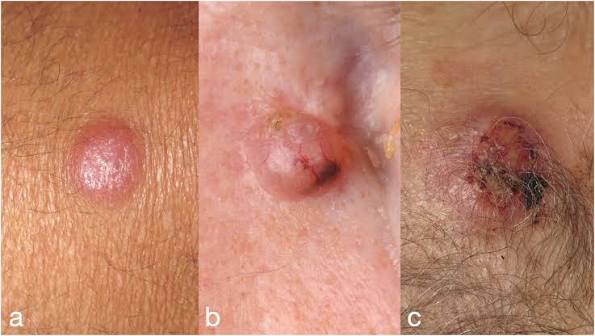
Merkel cell carcinoma may present as a painless, firm or shiny skin lump. Common features may include:
- A rapidly growing skin lesion
- A painless lump or nodule
- A firm or dome-shaped growth
- A red, pink, purple or skin-coloured lesion
- A lesion occurring on sun-exposed skin
- Bleeding or ulceration in some cases
- Changes in the size or appearance of an existing lesion
- Swelling of nearby lymph nodes in advanced cases
A rapidly growing skin lesion should not be ignored, even when it is painless. These symptoms can also occur with other skin conditions, so proper medical evaluation and biopsy are important.
How Is Merkel Cell Carcinoma Diagnosed?
Diagnosis usually begins with a detailed examination of the skin and medical history. If Merkel cell carcinoma is suspected, a biopsy is generally required to confirm the diagnosis.
Depending on the clinical situation, investigations may include:
- Detailed skin examination
- Skin biopsy
- Histopathological examination
- Immunohistochemical testing
- CT scan
- MRI in selected cases
- PET-CT when required
- Evaluation of nearby lymph nodes
- Additional tests for staging
Accurate staging is particularly important because Merkel cell carcinoma can spread to lymph nodes and distant organs. The results of pathology and imaging help the oncology team determine the most appropriate treatment strategy.
Merkel Cell Carcinoma Treatment
Treatment for Merkel cell carcinoma depends on the stage and individual characteristics of the cancer.
Depending on the patient's condition, treatment may include:
- Surgery
- Radiation therapy
- Immunotherapy
- Lymph node evaluation or treatment
- Systemic cancer treatment for advanced disease
- A combination of treatments
Surgery is commonly considered for localized Merkel cell carcinoma. Radiation therapy may also play an important role because of the risk of local or regional recurrence associated with this cancer. For advanced or metastatic Merkel cell carcinoma, systemic treatments such as immunotherapy may be considered. Treatment decisions should be individualized according to the patient's stage, previous treatment and overall health.
Radiation Therapy for Merkel Cell Carcinoma
Radiation therapy uses high-energy radiation to damage and destroy cancer cells. Merkel cell carcinoma is considered a radiosensitive cancer and radiation therapy may have an important role in selected patients.
Radiation therapy may be considered:
After Surgery
Radiation therapy may be recommended after surgical removal of the tumor when there are factors that increase the risk of local recurrence. The decision depends on features such as tumor size, margins, lymphovascular involvement, lymph node status and other pathological findings.
When Surgery Is Not Possible
For selected patients who cannot undergo surgery because of tumor location, medical conditions or other factors, radiation therapy may provide a local treatment option.
For Lymph Node Involvement
Merkel cell carcinoma can spread to nearby lymph nodes. Radiation therapy may be considered for involved or high-risk lymph node regions depending on the stage and overall treatment plan.
For Recurrent or Advanced Disease
Radiation therapy may also be used for selected recurrent or advanced tumors to provide local control or help manage symptoms caused by the cancer.
Advanced Radiation Therapy for Merkel Cell Carcinoma
Radiation treatment for Merkel cell carcinoma requires careful planning because these tumors may occur on the face, scalp, neck, arms or other areas close to important structures.
Modern radiation planning may allow the radiation oncology team to:
- Precisely define the tumor or surgical treatment area
- Include areas at risk of microscopic disease when appropriate
- Deliver the prescribed radiation dose accurately
- Reduce unnecessary radiation exposure to surrounding healthy tissues
- Consider nearby sensitive organs and structures
- Individualize treatment according to the patient's diagnosis and stage
Depending on the treatment area and clinical situation, techniques such as Intensity-Modulated Radiation Therapy (IMRT) and image-guided radiation therapy may be considered.
Radiation Therapy for Merkel Cell Carcinoma of the Head and Neck
Merkel cell carcinoma commonly develops on sun-exposed areas, including the head and neck. Radiation treatment in these regions requires careful planning because tumors may be located close to the eyes, brain, spinal cord, salivary glands, jaw and other sensitive structures. The radiation oncology team considers the exact location and extent of the tumor while developing the treatment plan. The aim is to provide effective local and regional treatment while limiting unnecessary radiation exposure to surrounding healthy tissues as much as reasonably possible.
Multidisciplinary Treatment for Merkel Cell Carcinoma
Merkel cell carcinoma may require coordinated care between several specialists. Depending on the stage and treatment requirements, the team may include:
- Dermatologist
- Surgical oncologist
- Radiation oncologist
- Medical oncologist
- Pathologist
- Radiologist
- Other specialists when required
A multidisciplinary approach helps integrate surgery, radiation therapy and systemic treatments appropriately. The role of radiation therapy is determined according to the patient's individual disease characteristics and overall treatment strategy.
What to Expect During Radiation Therapy?
Before radiation treatment begins, the radiation oncology team performs a detailed planning process. Imaging and information from pathology and previous surgery are reviewed to determine the treatment area, radiation dose and technique.
During treatment:
- The patient is positioned carefully according to the treatment plan.
- The treatment area is verified before radiation delivery.
- Radiation is delivered using the selected technique.
- The patient's response and possible treatment-related effects are monitored.
Radiation therapy itself is generally painless. Depending on the treatment area and radiation dose, patients may experience skin redness, irritation, dryness, fatigue or other localized effects. The radiation oncology team monitors patients throughout treatment and provides appropriate supportive care.
Why Choose an Experienced Radiation Oncologist for Merkel Cell Carcinoma?
Merkel cell carcinoma requires careful treatment planning because of its aggressive behavior and potential risk of local and regional spread. Radiation therapy decisions should take into account the tumor characteristics, lymph node status, surgical findings and overall treatment plan.
Dr. Gagan Saini follows a personalized approach to radiation oncology, considering:
- Tumor size and location
- Stage of Merkel cell carcinoma
- Surgical margins
- Lymph node involvement
- Pathology findings
- Previous treatment
- Nearby sensitive structures
- Overall health and treatment goals
The objective is to provide appropriate radiation treatment while minimizing unnecessary exposure to surrounding healthy tissues.
Importance of Early Evaluation for Merkel Cell Carcinoma
Because Merkel cell carcinoma can grow rapidly, a new or rapidly enlarging skin lesion should be evaluated without unnecessary delay. Early diagnosis can help determine the stage of the disease and allow the oncology team to plan appropriate treatment. A rapidly growing, painless, firm or unusual skin lesion does not necessarily mean Merkel cell carcinoma, but it should not be ignored. A biopsy and appropriate specialist evaluation are important when the diagnosis is suspected.
Consult Dr. Gagan Saini for Merkel Cell Carcinoma Treatment
Merkel cell carcinoma requires specialized and timely cancer care because of its potential to grow and spread rapidly. Treatment may involve surgery, radiation therapy, immunotherapy or a combination of approaches depending on the stage and individual clinical factors. If you are searching for the best Merkel cell carcinoma treatment in Noida and Delhi NCR, best Merkel cell carcinoma doctor in Noida and Delhi NCR, Merkel cell carcinoma specialist, Merkel cell carcinoma treatment oncologist or an experienced radiation oncologist, Dr. Gagan Saini can evaluate your condition and discuss whether radiation therapy may be appropriate as part of your overall treatment plan. Book a consultation with Dr. Gagan Saini to discuss your Merkel cell carcinoma diagnosis and understand the personalized radiation treatment options suitable for your condition.
Frequently Asked Questions
1. What is Merkel cell carcinoma?
Merkel cell carcinoma is a rare and aggressive type of skin cancer that develops from specialized Merkel cells in the skin.
2. What are the symptoms of Merkel cell carcinoma?
It commonly appears as a rapidly growing, painless, firm or shiny skin lump that may be red, pink, purple or skin-coloured.
3. Can Merkel cell carcinoma be treated with radiation therapy?
Yes. Radiation therapy can play an important role in selected Merkel cell carcinoma cases, including after surgery, for certain lymph node involvement and for recurrent or advanced disease.
4. Is Merkel cell carcinoma curable?
Treatment outcomes depend on the stage, tumor characteristics, lymph node involvement and whether the cancer has spread. Early diagnosis and appropriate treatment are important for improving outcomes.
5. Can Merkel cell carcinoma spread to lymph nodes?
Yes. Merkel cell carcinoma can spread to nearby lymph nodes and, in advanced cases, to distant parts of the body. Staging helps determine the extent of disease.
6. When should I consult a radiation oncologist for Merkel cell carcinoma?
A radiation oncologist should be consulted when radiation therapy is being considered after surgery, for lymph node involvement, recurrent disease or selected advanced cases. Early specialist evaluation can help determine the appropriate role of radiation therapy.